MoBi-Group
The Center for 3D Printed Heat Exchanger Research.
Advancing Monolithic Bicontinuous Core Heat Exchangers:
MoBi-Core
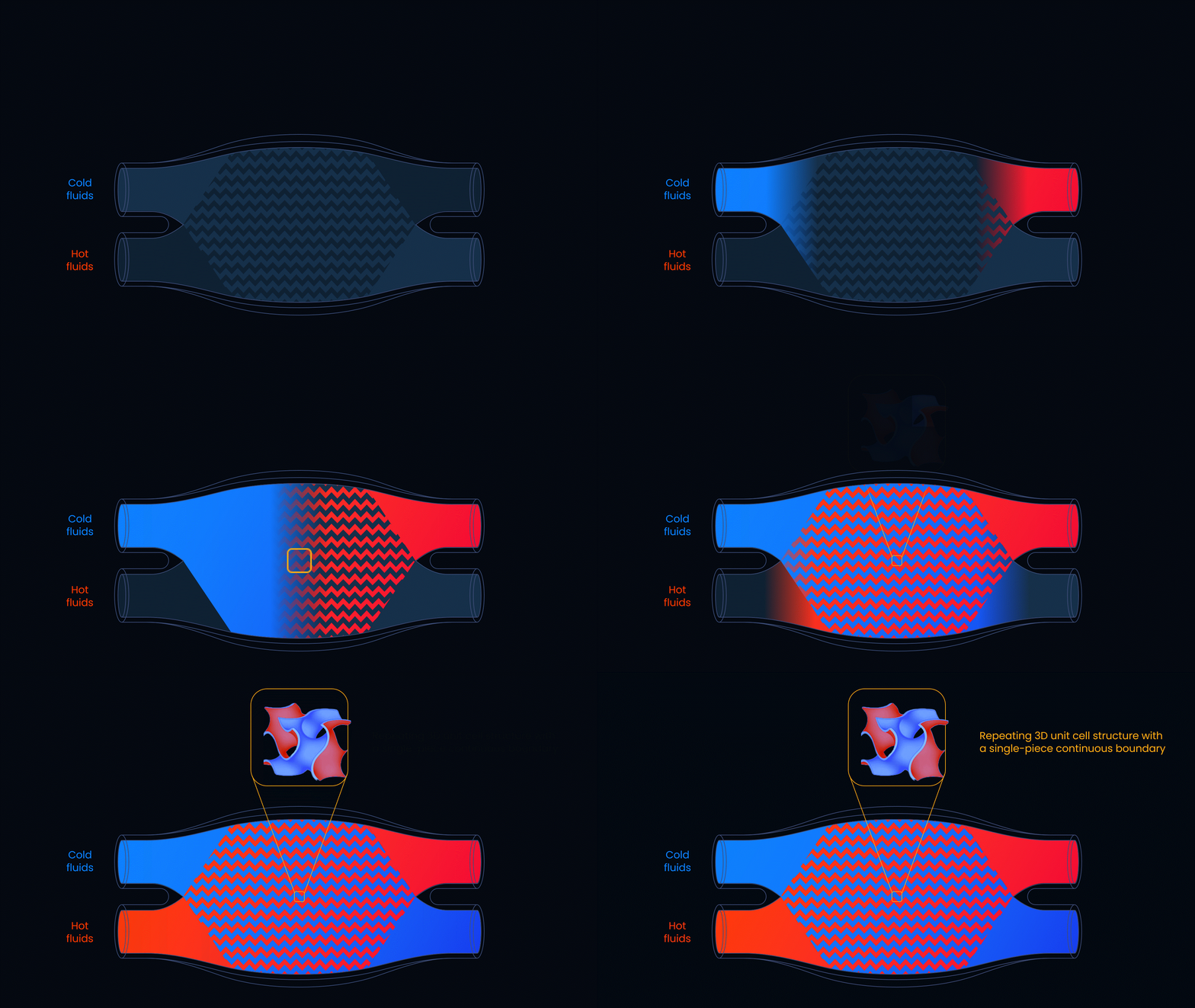
Additive manufacturing enables a new class of heat exchanger.
MoBi-Core heat exchangers use a monolithic bicontinuous internal core: a single continuous boundary separates two hydraulically isolated, intertwined fluid labyrinths inside one integrated heat exchanger.
MonolithicSingle-piece or highly integrated additive construction.
BicontinuousTwo continuous, intertwined fluid labyrinths.
IsolatedThe fluids remain hydraulically separated by a continuous heat-transfer boundary.
Triply periodic minimal surface architectures, including the Gyroid and Schwarz Diamond, have already demonstrated the potential of additively manufactured bicontinuous heat exchangers. But they represent only a small part of the MoBi-Core design space.
The Research Space
MoBi-Core opens a massive multidimensional research space.
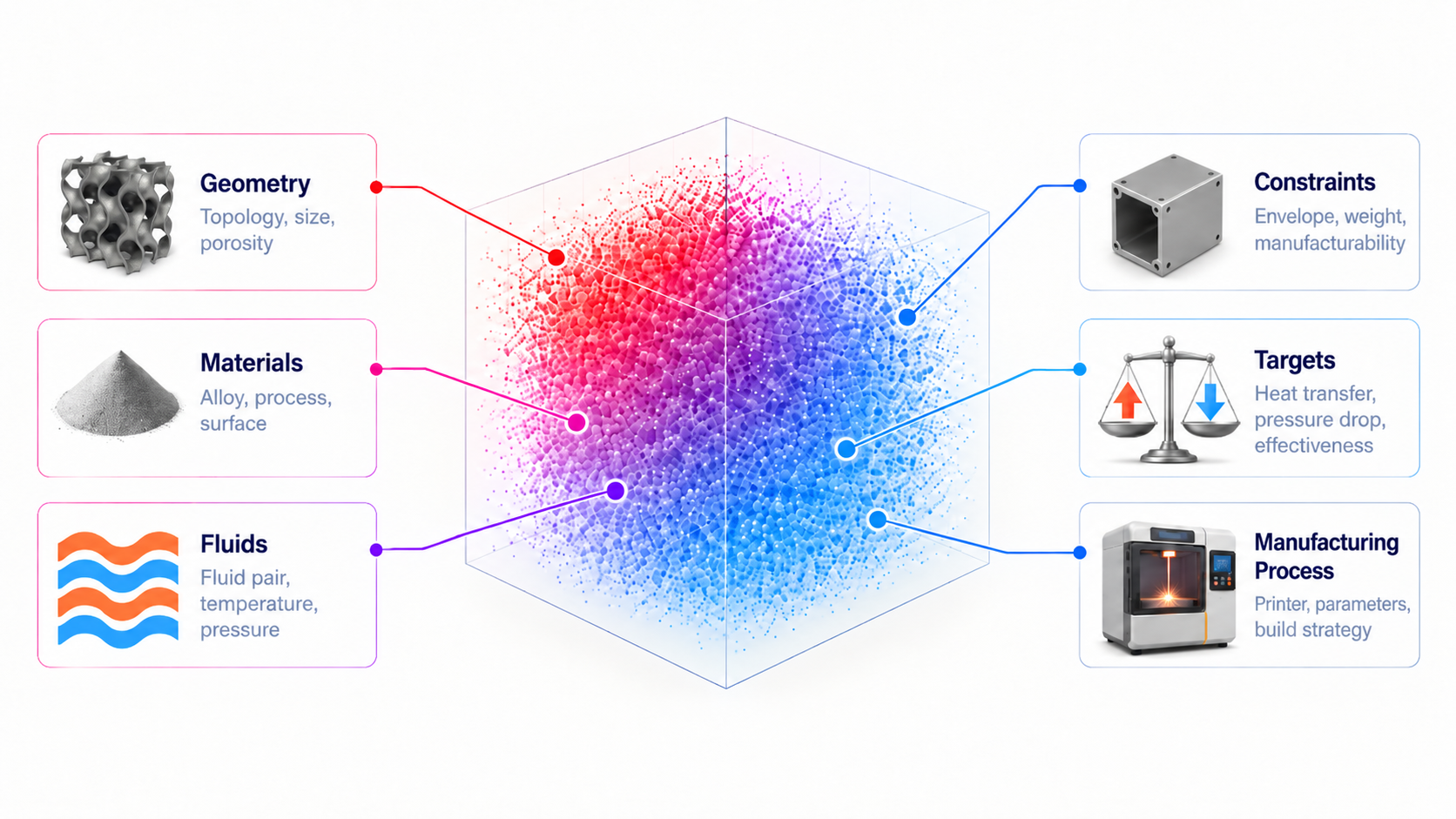
Geometry is only the beginning. Core architecture, material, manufacturing process, machine, surface condition, fluid properties, operating conditions, application requirements, and industry constraints all interact with the heat-exchanger design.
The research opportunity is understanding how these variables interact—and which combinations work best for a given application.
MoBi-Group coordinates the research needed to understand this design space.
MoBi-Form
MoBi-Form makes the design space researchable.
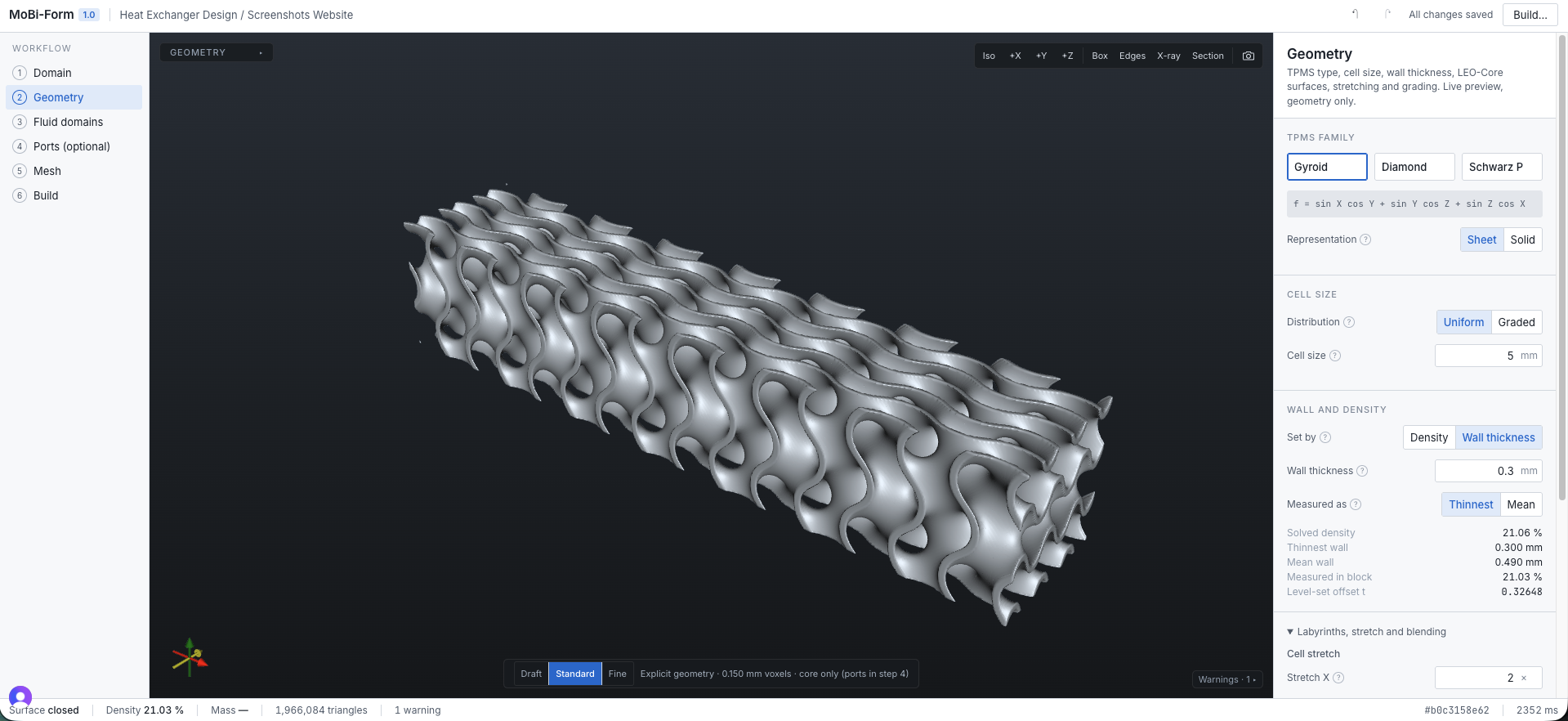
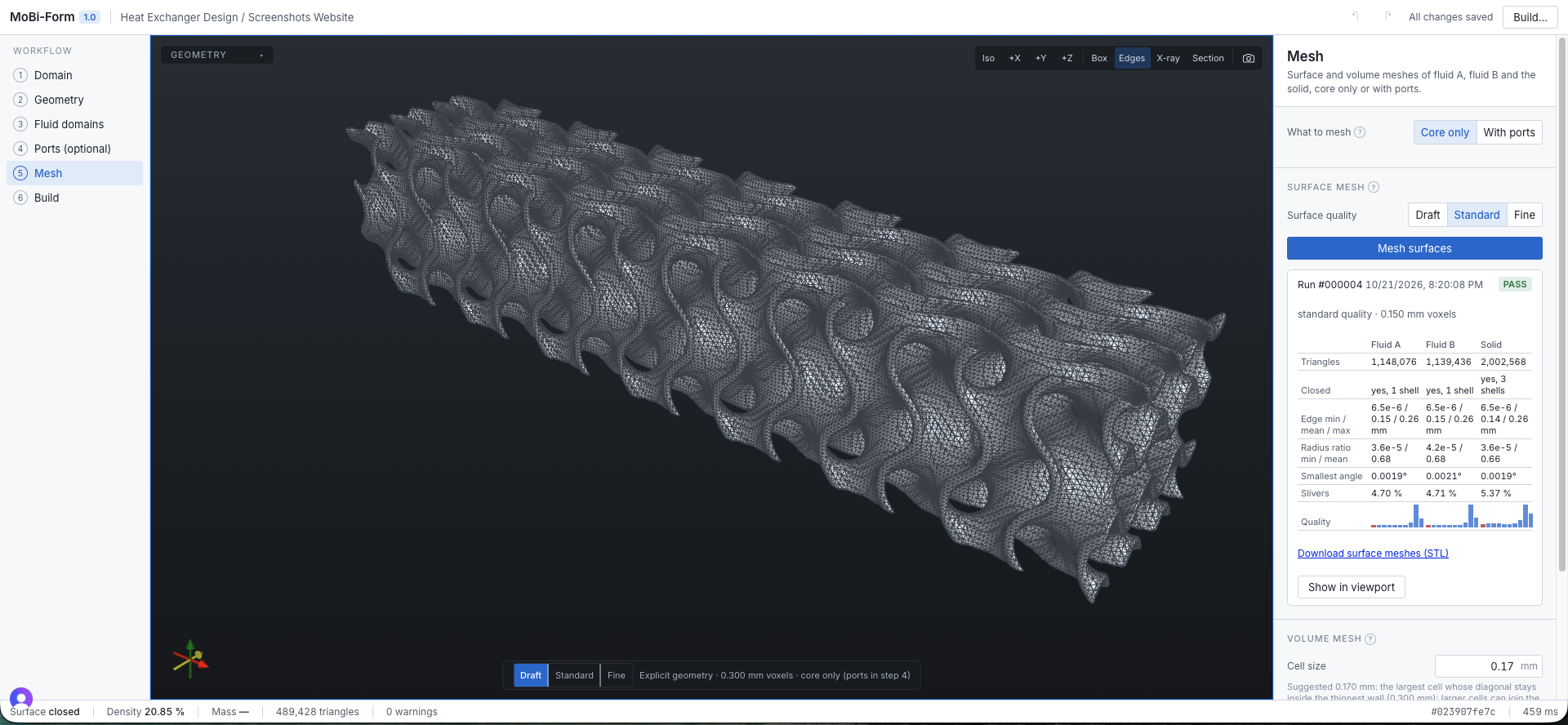
MoBi-Form is a software tool that allows for full parametric control over MoBi-Core heat exchanger generation. MoBi-Form allows for the design of the core, separation of the fluid domains, addition of walls, ports, plenums, and finning structure to isolate the two fluid labyrinths. MoBi-Form can also surface mesh the solid walls and mesh the two fluid labyrinths.
Define the geometry
Different TPMS topologies can be applied, with control over unit cell size, orientation, phase, wall thickness, volume fraction, unit cell stretching, and blending between TPMS topologies.
MoBi-Form also allows creation of LeoCore: the addition of a secondary surface in one of the labyrinths.
Separate the fluid domains
MoBi-Form separates the fluid domains created by the core geometry. Hot and cold labyrinths can be turned on and off and inspected.
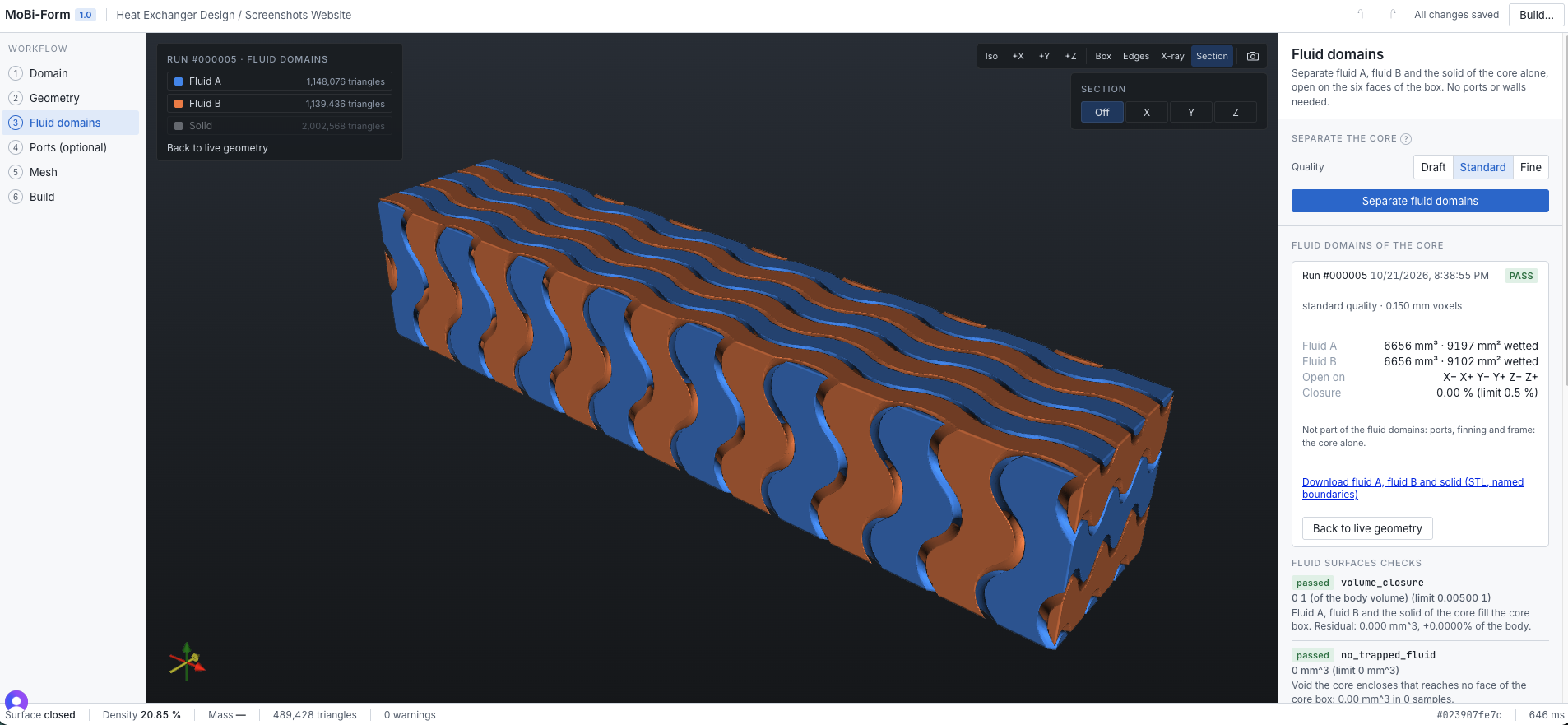
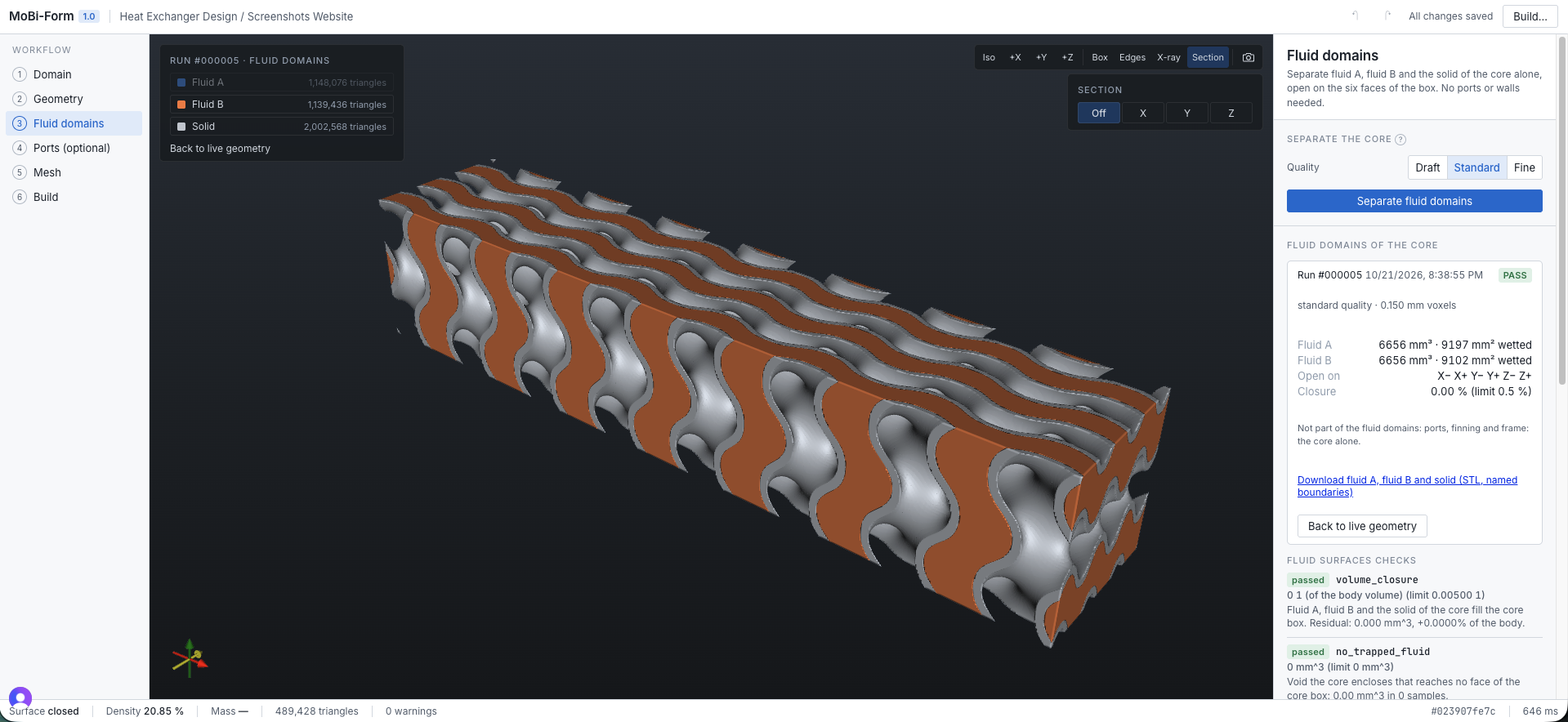
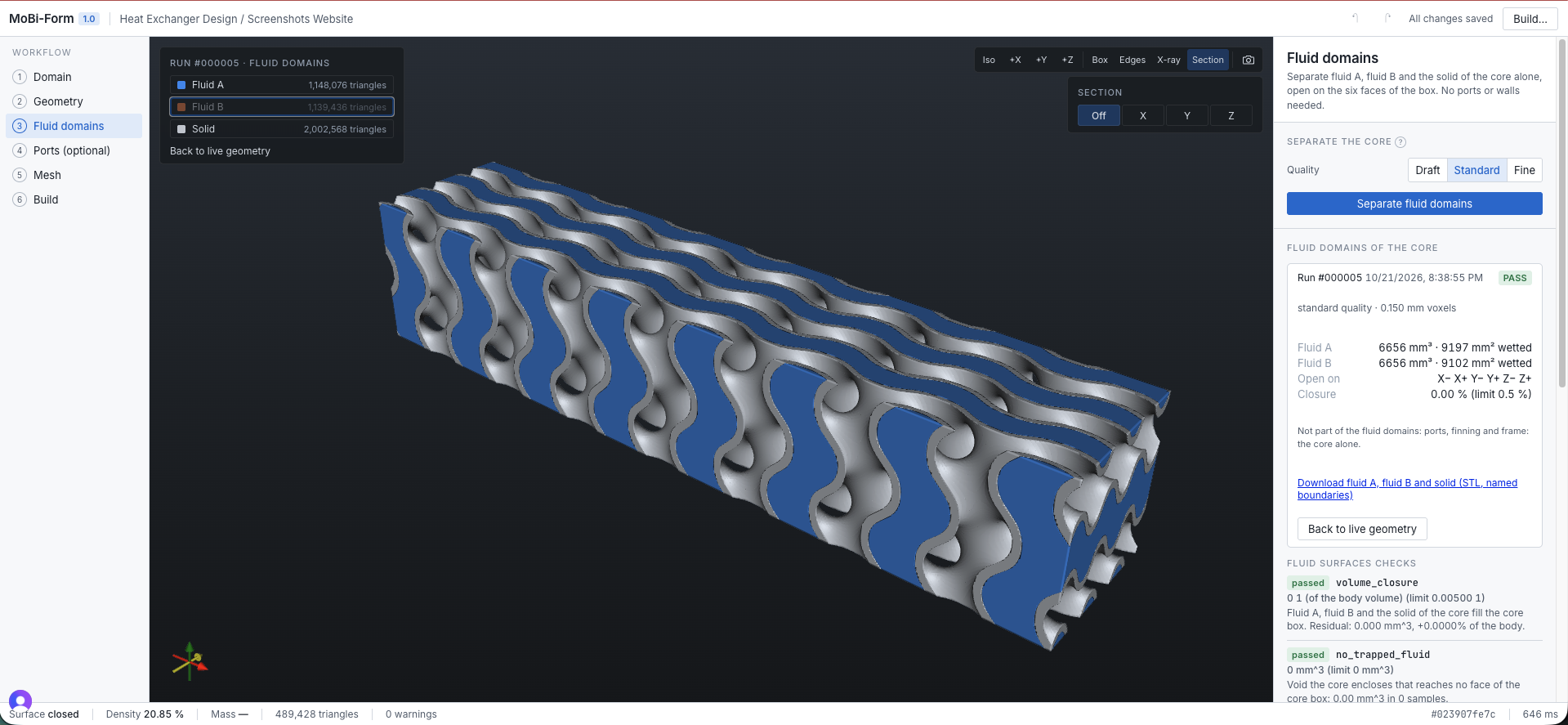
Figure 4 · Separated fluid domains: both labyrinths, hot labyrinth, and cold labyrinth.
Complete the heat exchanger
MoBi-Form automatically creates finning structure to selectively shunt off labyrinths for the appropriate port. MoBi-Form also allows for full control of port location on the core, variation in plenum type, and parametric control over the plenum and port geometries.
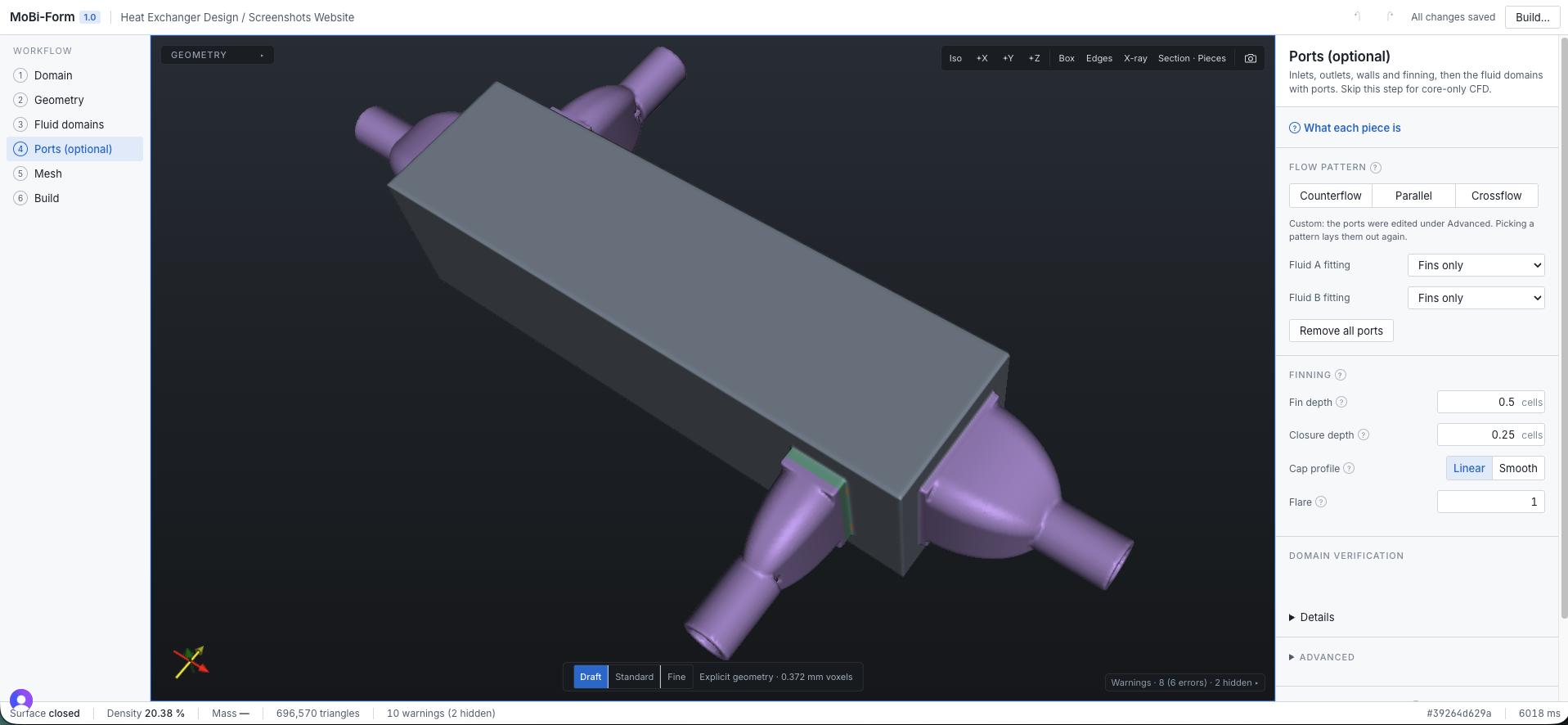
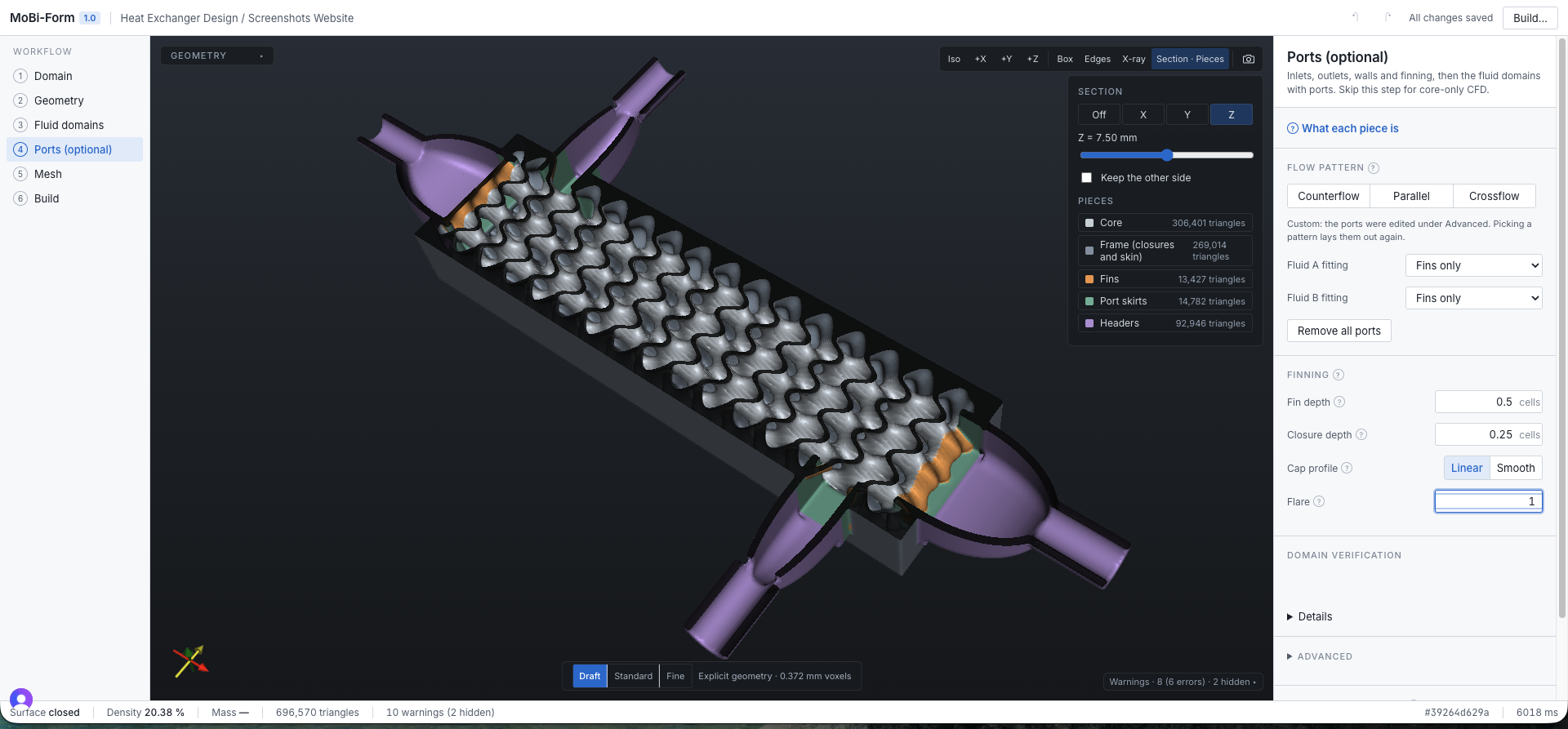
Figure 5 · Heat exchanger assembly and sectioned view.
Mesh and export
MoBi-Form creates surface meshes for finite element analysis, volume meshes of the fluid domains for computational fluid dynamics, and generates a 3MF file for 3D printing.
Research Access
Research MoBi-Core with us.
| MoBi-Group provides | Researchers contribute |
|---|---|
| MoBi-FormDesign, mesh, and study infrastructure | Independent ResearchNumerical and experimental investigations |
| Research RightsDefined non-commercial access to MoBi-Core | ResultsPerformance data and technical findings |
| Research OpportunitiesImportant questions ready to investigate | ValidationIndependent comparison, reproduction, and verification |
| Shared KnowledgeMethods, references, and findings from the growing research network | KnowledgeManufacturing, experimental, and application insight |
Research tools in exchange for research contributions.
Request Research AccessReady to investigate MoBi-Core?
Share your contact information to request MoBi-Core research access.